Crafting Nostalgic Allure with Halloween Vintage Backgrounds
There is a specific kind of warmth associated with Halloween imagery that modern, hyper-realistic assets often miss. We are talking about the gritty texture of old horror comics, the slightly faded palette of 1970s decorations, and the grainy atmosphere of classic cinema. If your creative work relies on evoking that sense of history and eerie nostalgia, having the right foundation is non-negotiable. This is where the Halloween Vintage Backgrounds collection enters the conversation, offering a curated set of textures designed to ground your designs in a timeless aesthetic.
Unlike the clean, vector-based graphics that dominate modern web design, this collection leans into the analog feel. It provides six distinct high-resolution canvases that serve as a base for complex compositions. For designers and entrepreneurs, these assets are not just decorative elements; they are tools for storytelling. They allow you to bypass the sterile look of stock imagery and create visuals that feel handcrafted and authentic. Whether you are a graphic designer assembling a brand identity for a seasonal event or a small business owner creating packaging for artisanal goods, understanding how to leverage these backgrounds can significantly elevate your final product.
The Anatomy of a Vintage Aesthetic
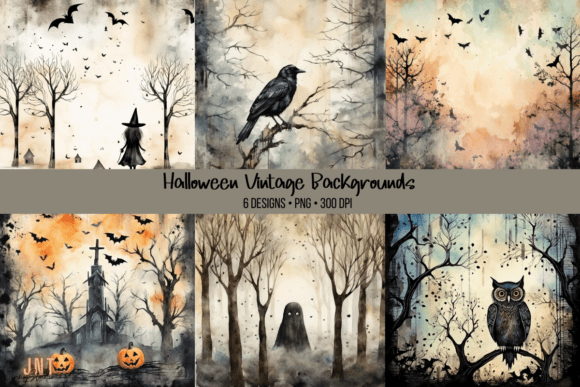
When we look at the Halloween Vintage Backgrounds, we are analyzing more than just the subject matter. The value lies in the resolution and the texture. Delivered as six PNG files at 12 x 12 inches and 300 DPI, these assets are built for print-ready quality. This high resolution ensures that the intricate details—the subtle cracks, the noise, and the tonal shifts—remain crisp even when printed on large formats. This is crucial for packaging design or physical signage where pixelation can instantly destroy the illusion of age.
The visual personality of this collection is defined by its ability to evoke memory. It mimics the look of distressed paper, aged cardstock, and weathered surfaces. This style acts as a bridge between the viewer and the content, triggering associations with classic literature or vintage holiday decorations. From a design perspective, using a textured background like this immediately softens the hard edges of modern typography. It provides a "ground" for your text, making serif fonts look more authoritative and script fonts feel more organic. It creates a visual hierarchy where the background supports the foreground without competing for attention.
However, it is important to note the technical specifics. These are rasterized PNG files, not SVG files, and they are not layered for cutting machines like Cricut or Silhouette. This distinction is vital for crafters. While they are perfect for digital backdrops or print-and-cut projects where the image fills the entire sheet, they are intended as background textures rather than die-cut shapes. This makes them ideal for social media graphics, web design headers, and editorial design where a rich, atmospheric layer is needed behind text and other vector elements.
Strategic Applications for Modern Creators
Understanding the file format is one thing; applying it effectively is another. For the marketer or content creator, these backgrounds offer a practical solution to the "blank canvas" problem. When designing an email campaign for October, a blank white background feels generic. Dropping one of these vintage textures into the header instantly sets the mood, increasing engagement by visually signaling the theme before the reader even processes the headline.
For those in branding and logo design, these assets work exceptionally well for mockups. If you are presenting a logo concept for a brewery, a boutique, or a seasonal attraction, placing the logo over a textured vintage background adds context and perceived value. It helps the client visualize the brand in the real world. Similarly, in packaging design, these textures can serve as the primary surface for labels, particularly for products aiming for an "old apothecary" or "general store" vibe.
Here are specific ways to integrate these assets into your workflow:
- Digital Publishing: Use them as the background for e-book covers or PDF worksheets to add a tactile feel to digital products.
- Social Media Marketing: Create Instagram stories or Pinterest pins that stand out in a feed of flat colors. The texture adds depth that flat design lacks.
- Event Stationery: For weddings or parties with a gothic or vintage theme, these backgrounds provide the perfect layer for invitations and menus.
- Web Headers: Overlay them with a semi-transparent gradient to ensure text readability while maintaining a unique header image for a blog post.
The versatility of these design assets lies in their neutrality. They are atmospheric but not overly specific, meaning they can support a wide range of subjects, from typography-focused posters to photo manipulations.
Mastering Font Pairings and Visual Hierarchy
A background is only as effective as the foreground elements that sit upon it. One of the most common mistakes when working with vintage textures is poor font pairing. Because these backgrounds have a lot of "grit" and visual noise, using a thin, delicate sans serif font can lead to readability issues where the text gets lost in the texture.
To create a strong visual hierarchy, contrast is your best friend. If the background is busy and textured, your primary typography needs to be bold and clear. Consider using a heavy slab serif or a bold sans serif for headlines. These weightier styles can "punch through" the texture, ensuring the message is legible. For accent text or subheadings, a handwritten font or a flowing script font can work beautifully, provided it is placed over a slightly quieter area of the background or backed by a subtle drop shadow or color overlay.
Think about the brand identity you are building. If the goal is a "Vintage Apothecary" look, pairing these backgrounds with a condensed serif font creates immediate recognition. If you are going for a "Retro Horror" vibe, a jagged display font paired with these textures can be incredibly effective. The key is to treat the background as a supporting actor. It sets the stage, but the typography delivers the lines.
Evaluating Fit and Practical Usage
Before incorporating Halloween Vintage Backgrounds into a project, it is worth running a quick fit check. Does the project require a high-energy, neon aesthetic? If so, these aged textures might feel out of place. However, if the project calls for warmth, nostalgia, history, or a bit of grit, they are likely the perfect fit.
When downloading the ZIP file, you will find the organization straightforward: six distinct variations. This variety is helpful for maintaining consistency across a campaign without becoming repetitive. You can use one background for the main poster and a different variation for the social media announcement, ensuring the brand identity remains cohesive but visually interesting.
Keep in mind the commercial utility. Because these are high-resolution assets (300 DPI), they are safe for professional print jobs. You do not need to worry about the quality degrading when sending files to a printer for flyers or posters. However, always be mindful of the file size; high-res PNGs can be heavy. When using them for web design, it is often best practice to optimize the images for the web to ensure fast page load times, perhaps converting them to JPGs or compressed WebP formats after the design is finalized.
Ultimately, Halloween Vintage Backgrounds are about adding character. In a digital landscape that is increasingly polished and synthetic, these textures offer a return to something tangible. They provide the grit and grain that make designs feel authentic, helping creators build projects that resonate emotionally with their audience. Whether for a seasonal campaign or a permanent fixture in a brand's visual library, they offer a practical, high-quality foundation for creative work.